Build SEO Content Around People, Intent, and Story
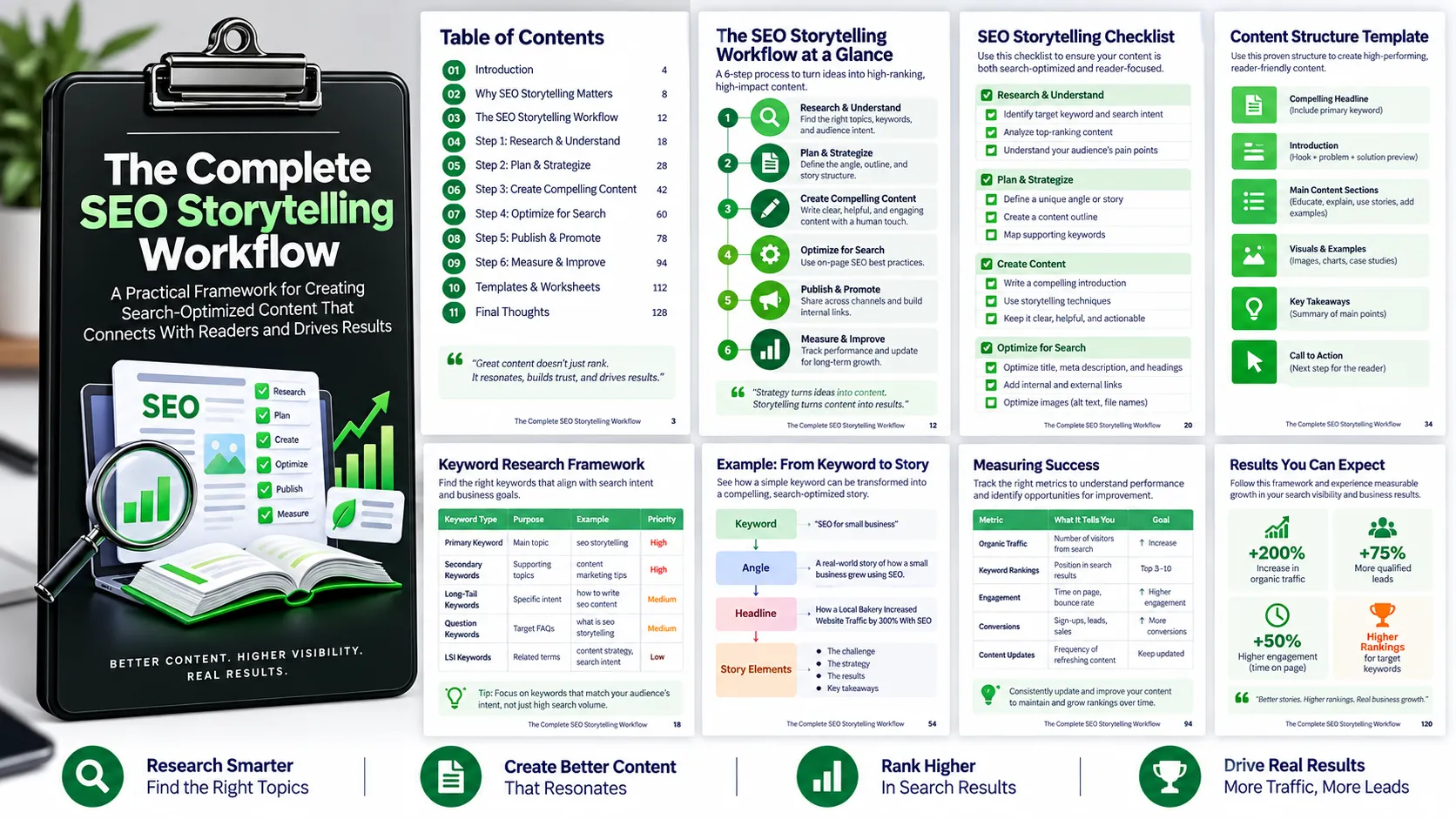
The Complete SEO Storytelling Workflow provides a structured process for creating content that works at two levels: it addresses the information needs revealed by search behavior while giving readers a coherent and engaging story.
Rather than beginning and ending with keywords, the workflow starts with audience understanding and search intent. It then connects keyword research to narrative development, content architecture, on-page optimization, distribution, measurement, and ongoing improvement.
1. Start With Audience Research and Search Intent
Strong SEO storytelling begins with understanding the audience behind the search query. The workflow recommends creating empathy maps that capture what the audience thinks, feels, says, and does in relation to the topic.
Build Detailed Audience Avatars
Turn audience research into one-page avatar sheets containing key information such as primary goals, main obstacles, information triggers, and success metrics. The workflow recommends grounding these insights in both quantitative and qualitative data.
Analyze Search Intent Signals
Search results provide clues about what users expect from a query. Examine SERP features such as featured snippets, shopping carousels, and People Also Ask boxes to determine whether queries indicate informational, navigational, commercial, or transactional intent.
Connecting audience motivations with search intent helps identify story themes that can resonate with readers at different stages of the customer journey.
2. Turn Keywords Into Topics and Stories
Once audience needs and search intent are understood, organize keyword data into a structure that can support both SEO and storytelling.
Gather and Clean Keyword Data
Collect keywords from search consoles, competitor analysis, and audience research. Remove irrelevant terms and standardize the remaining data before using it for content planning.
Create Logical Keyword Clusters
Group keywords according to semantic relationships, search intent, and audience needs. Logical clustering helps create cohesive topics and reduces the risk of content cannibalization.
Develop Narrative Angles
Keyword clusters can become more than lists of search terms. Transform each cluster into a narrative angle using structures such as the hero's journey, myth-busting, or transformation case studies.
This connects search-focused topic planning with a storytelling structure that gives the content a clearer narrative direction.
Build Pillar-and-Cluster Architecture
Create comprehensive pillar pages around broad topics and supporting cluster content around specific subtopics. Link related content appropriately so the resulting architecture provides a logical path through the broader topic and its supporting subjects.
3. Design the Page Before Writing It
The workflow recommends creating a narrative-optimized page blueprint before developing the complete content. The blueprint should account for the headline, lede, promise, body scenes, proof, transition, call-to-action, and SEO aftercare.
Create Micro-Scenes
Break content into digestible sections of approximately 150 to 300 words. These sections create natural stopping points while bridge sentences maintain the momentum of the overall narrative.
Optimize Metadata for People and Search
Metadata should communicate value to both search systems and human readers. The workflow recommends a title-tag formula built around the primary keyword, an emotional hook, and the brand, with a target of staying within 55 characters.
It also recommends compelling meta descriptions of approximately 140 to 155 characters.
Use Structured Data
Implement appropriate schema markup such as Article, FAQ, HowTo, or VideoObject. The workflow identifies structured data as part of improving how content can appear and be understood in search results.
4. Create Content With Semantic Depth and Strong Readability
During content creation, avoid relying on repetitive exact-match keyword usage. Instead, incorporate related terms and semantic variations naturally throughout the content to build broader topical depth.
Optimize Multimedia
Use compressed images with descriptive file names and alt text. For video content, include custom thumbnails and transcripts so the multimedia elements are properly incorporated into the content experience.
Make Content Easy to Read and Scan
The workflow recommends using a 14 to 16px base font with approximately 1.6 line-height, breaking content into sections under 200 words, limiting bullet lists to six items, and emphasizing important phrases for readers who scan.
Apply the “Skim, Scan, Settle” Test
Review the content at three reading levels. During skimming, the headlines should communicate the overall story. During scanning, the first sentences should provide a coherent path through the content. During settling, the full text should reward deeper reading.
5. Distribute Content and Earn Links
Publishing the content is only one part of the workflow. Develop a multi-channel distribution plan that coordinates owned, earned, and paid channels according to customer journey stages.
Use the “Give, Guide, Gain” Approach
The outreach approach begins by providing value upfront, making implementation easier for recipients, and allowing links to emerge naturally from that value exchange.
Atomize Long-Form Content
Turn one long article into at least eight derivative pieces across different formats and platforms. Each derivative should be adapted to the native format of the platform where it will be distributed.
Track Distribution With UTM Parameters
Use UTM tracking parameters for derivative content so you can identify which formats and channels generate the most valuable traffic.
6. Measure Performance Across the Funnel
SEO storytelling should be measured beyond search visibility alone. The workflow recommends building a unified full-funnel dashboard that brings together search data, engagement metrics, conversion data, and revenue or lifetime value data.
This provides a broader view of content performance across the customer journey and connects content activity with downstream outcomes.
Use the HTMI Testing Loop
The workflow recommends a testing cycle based on four steps: make a hypothesis, test it, measure the results, and iterate based on what you learn.
Prioritize tests using the ICE framework, which considers impact, confidence, and ease.
7. Refresh and Improve Existing Content
SEO content requires ongoing optimization. Establish a content refresh schedule rather than treating publication as the final step.
Use Traffic Plateau Checks
The workflow recommends 90-day traffic plateau checks and 180-day comprehensive overhauls for declining content. It also recommends automated alerts for pages whose traffic falls below 50% of the previous quarter's traffic.
Document What Works
When a refresh produces significant improvement, record what changed, why the change worked, and how the approach might apply to other content pieces. A knowledge base of successful tactics allows useful lessons to become reusable rather than remaining isolated to one page.
Bring the Workflow Together
The complete workflow connects six major activities into one content process:
- Understand the audience: Build empathy maps, analyze search intent, and develop detailed audience avatars.
- Organize the topic: Clean keyword data, create logical clusters, develop narrative angles, and build pillar-and-cluster architecture.
- Design the content: Create a narrative page blueprint, develop micro-scenes, optimize metadata, and implement appropriate schema.
- Create and optimize: Use semantic keyword variations, optimize multimedia, and improve readability and scannability.
- Distribute and track: Coordinate channels, use the “give, guide, gain” approach, atomize content, and apply UTM tracking.
- Measure and improve: Use full-funnel reporting, run structured tests, refresh declining content, and document successful tactics.
Make SEO Storytelling a Repeatable Process
The workflow is designed to connect activities that are often handled separately. Audience research informs search intent. Keyword clusters inform narrative angles. Content architecture connects related topics. Page structure supports both storytelling and SEO. Distribution extends the life of published content, while measurement and refresh cycles create opportunities for continued improvement.
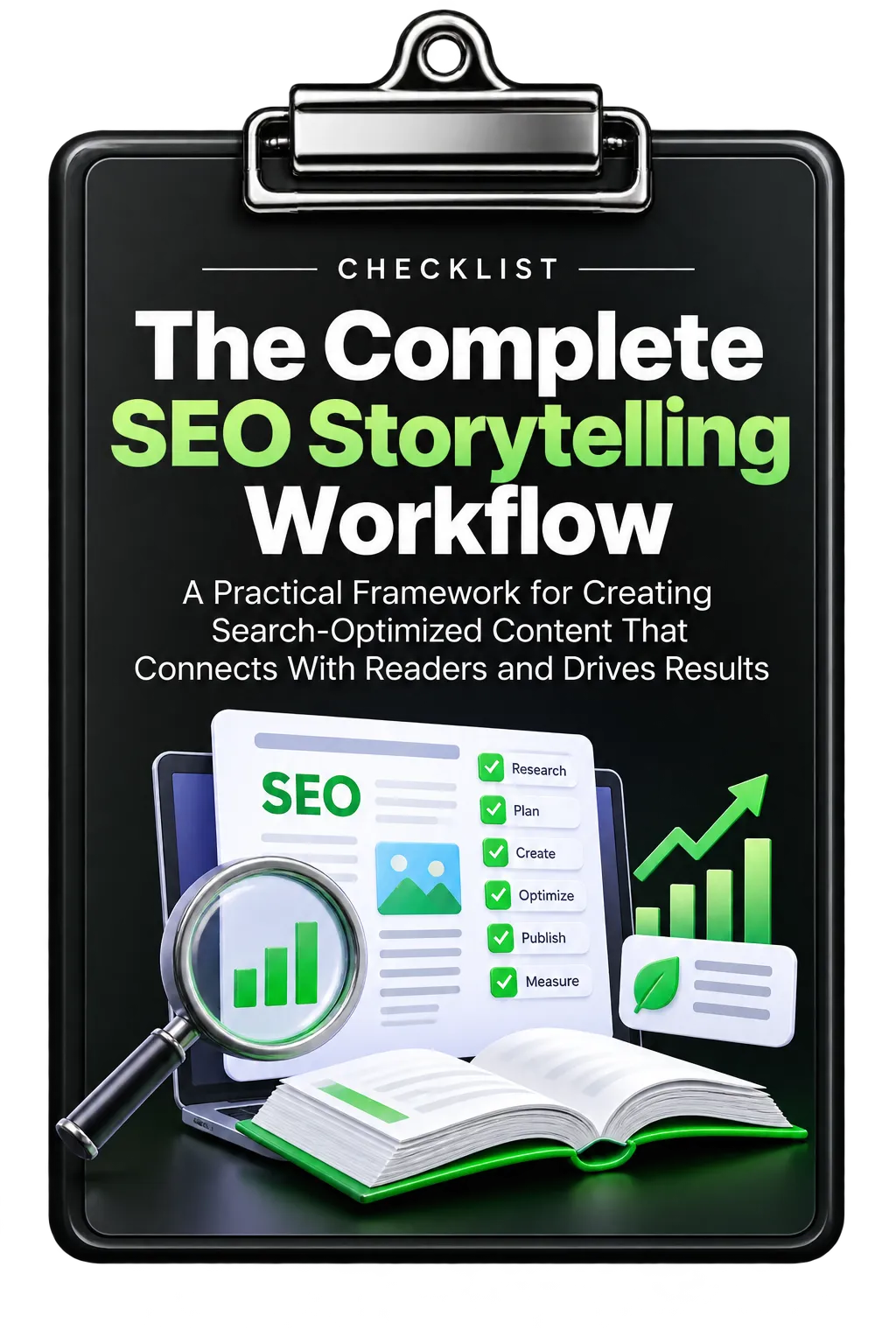
Use the complete checklist as a working reference for moving from audience understanding and keyword research through content creation, distribution, measurement, and optimization.