Turn Content Creation Into a Repeatable System
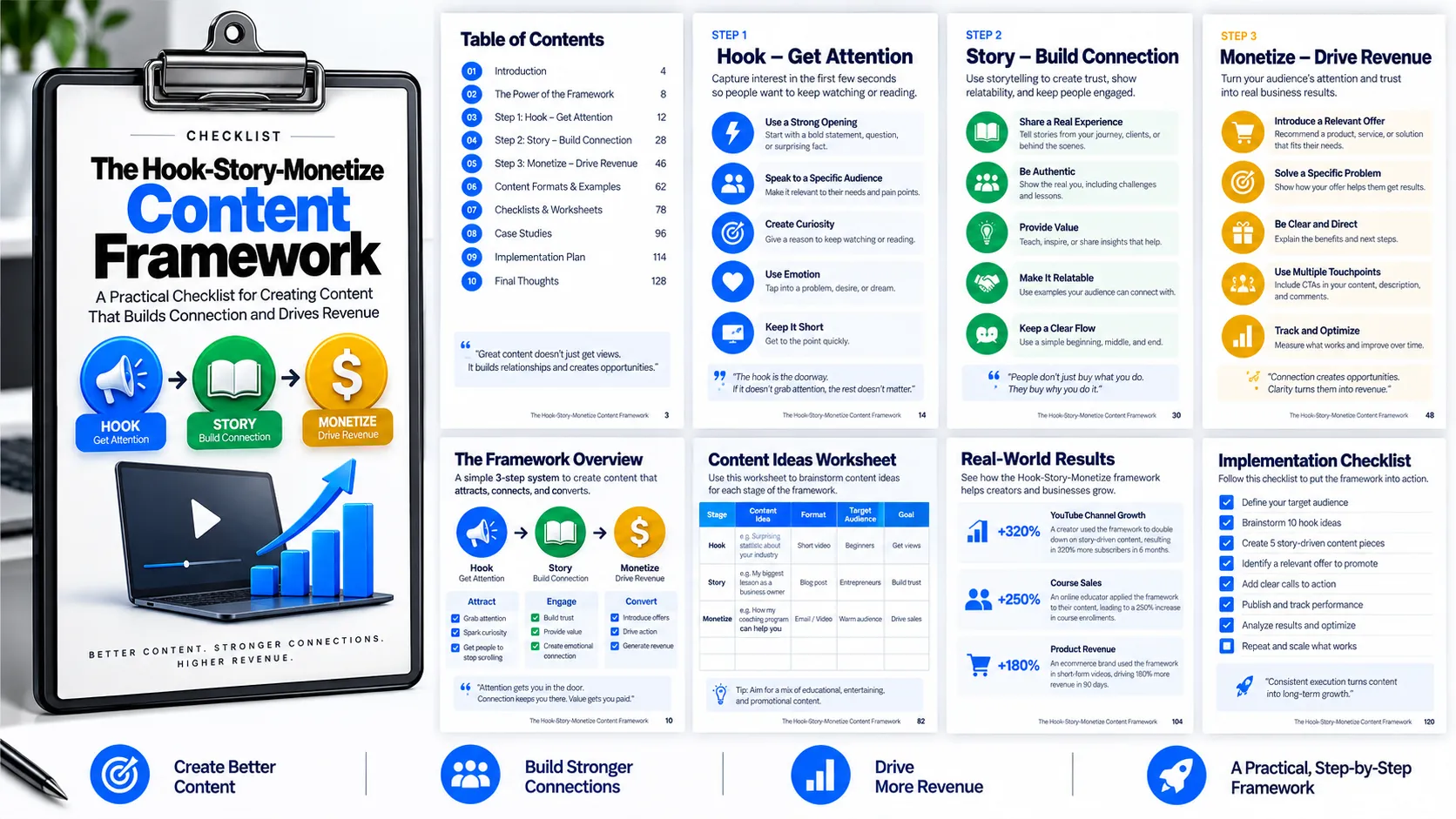
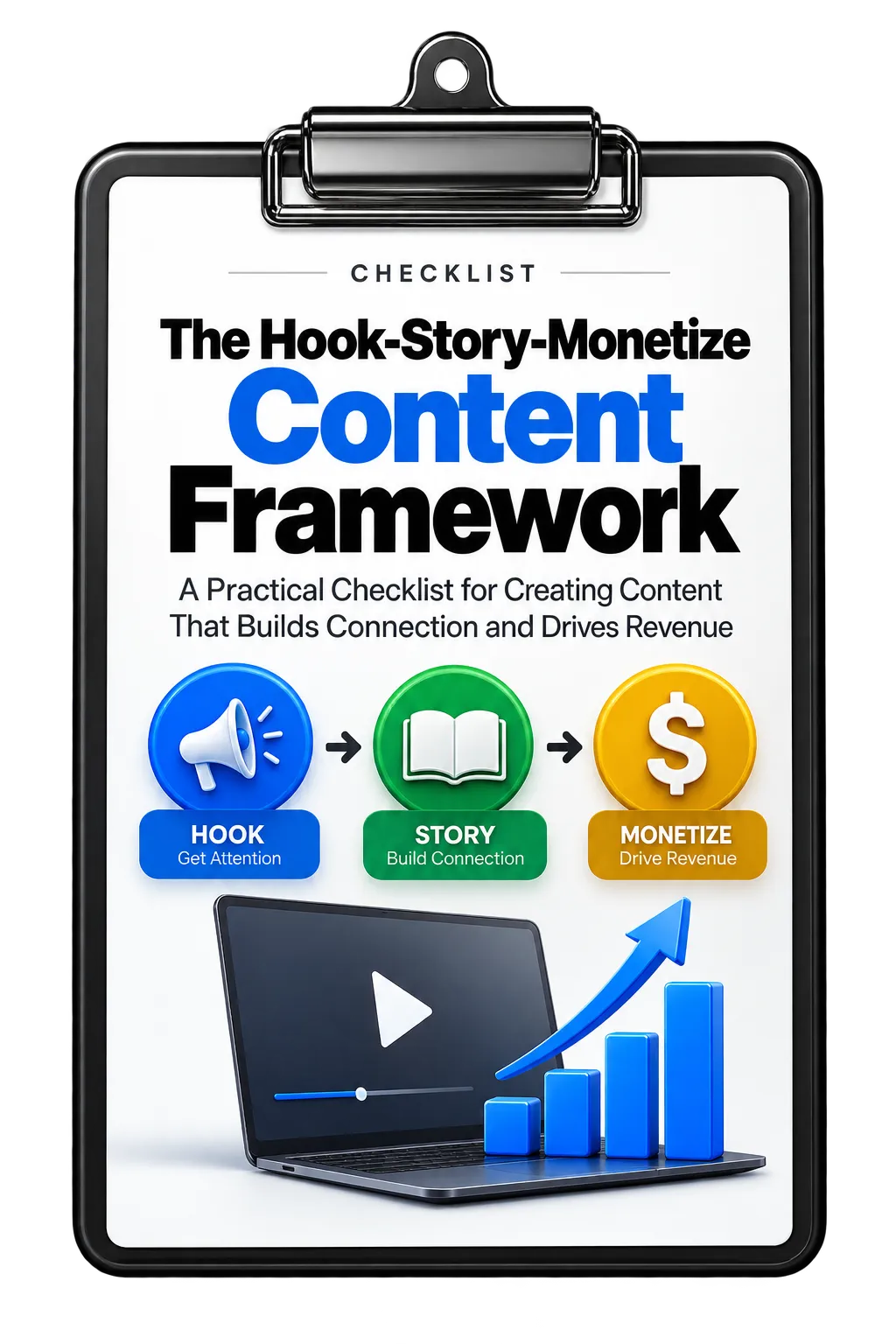
The Hook-Story-Monetize framework provides a structured way to create content that does more than attract attention. Its workflow connects the initial idea and opening hook with audience connection, a useful story, a natural offer, and post-publication optimization.
The goal is to use the same strategic process for each piece of content so that content creation supports both audience relationships and business objectives. The checklist begins before creation and continues through publication, optimization, and long-term system building.
1. Start With the Core Message
Before creating a post, define the specific problem you are addressing and the transformation you are offering. A clear core message keeps the content connected to your main area of expertise and creates greater consistency across your content.
Define the Monetization Goal
Every piece of content should have a strategic purpose. The checklist identifies several possible goals:
- Directly promote an offer.
- Build trust for future sales.
- Drive email signups.
- Demonstrate expertise.
This does not mean every post needs a direct sales pitch. Instead, the content should contribute to the broader business strategy.
Choose an Emotional Trigger
Select an emotional trigger that fits your audience's current needs. The framework identifies fear of missing out, curiosity, surprise, urgency, pride, anger, hope, and belonging as possible triggers.
The purpose is to create an emotional connection that supports action while remaining relevant to the audience.
2. Engineer the Hook
The opening of the content needs to interrupt the audience's normal scrolling pattern. The checklist recommends creating a pattern interrupt within the first three seconds using something unexpected, surprising, or counterintuitive.
Create a Curiosity Gap
A strong hook creates a gap between what the audience currently knows and what they want to know. The framework recommends using openings that create a clear reason to continue watching or reading.
Specificity is important. Instead of using a broad statement about struggling, the checklist recommends describing a concrete situation that makes the problem tangible and relatable.
Adapt the Hook to the Platform
Different platforms have different content cultures. The framework gives examples of platform-specific approaches: TikTok can favor entertainment and surprise, Instagram can combine visual and verbal hooks, and LinkedIn can emphasize professional insight.
The hook should therefore fit both the audience's problem and the expectations of the platform where the content appears.
3. Structure the Story Around the Audience
Once the audience has been drawn in, the story should establish context that reflects their current situation. The framework recommends creating a clear picture of where you were before the transformation and connecting that experience to the audience's own circumstances.
Share Relatable Conflict
Conflict can make a story feel real, but it should remain connected to the lesson or solution. The checklist recommends sharing struggles that are specific enough to feel authentic while remaining relatable rather than turning the content into emotional venting.
Show the Process Behind the Transformation
Do not focus only on the outcome. Demonstrate the thinking, discovery, or process that led to the change. Showing how the transformation happened provides the audience with actionable insight rather than simply presenting a result.
Be the Guide, Not the Hero
The framework positions the audience as the hero of their own story. Your role is to guide them using lessons from failures, setbacks, and experiences. Sharing what you learned and how others can avoid similar mistakes creates a more useful relationship with the audience.
4. Integrate Monetization Naturally
Monetization should follow the value delivered by the story. After demonstrating expertise through the journey and lesson, connect that lesson naturally to the product or service being offered.
Use One Clear CTA
The call to action should match the content's funnel stage. The checklist provides different approaches for different stages:
- Awareness: Encourage the audience to follow for more useful content.
- Consideration: Direct the audience toward a free guide.
- Conversion: Provide a direct action for learning more.
The framework recommends one focused CTA rather than multiple competing requests.
Use Psychological Triggers Authentically
The checklist identifies social proof, scarcity, authority, reciprocity, and connection as psychological triggers that can support monetization. These should serve the audience rather than manipulate them.
Use Soft-Sell Elements
Not every piece of content needs a direct pitch. Problems your product solves, tools you use, client transformations, and email-list invitations can be incorporated naturally without disrupting the value being delivered.
5. Optimize After Publication
Publishing the content is not the end of the process. The framework recommends measuring actions that indicate buying intent rather than relying primarily on vanity metrics.
Track Revenue-Driving Actions
Relevant signals identified in the checklist include email list signups, consultation requests, direct messages about services, and actual purchases. Likes and comments may indicate engagement, but the framework distinguishes them from actions more directly connected to revenue.
Test Different Hooks
Create similar pieces of content with different opening lines and compare the results over several weeks. Look at meaningful engagement such as saves, shares, and direct messages alongside passive engagement such as likes.
This process helps reveal which hooks resonate with your particular audience.
6. Build a Content System That Can Scale
Once content ideas and structures begin to work, turn successful patterns into a repeatable system.
Create a Story Bank
Capture moments that can become future content. The checklist recommends documenting valuable lessons, mistakes that taught something, recurring client questions, and surprising observations.
These everyday experiences can become sources for relatable content rather than requiring a new idea from scratch every day.
Batch Create From Successful Structures
When a Hook-Story-Monetize structure works, reuse the structural formula with different specific examples. This creates a systematic approach that maintains quality while reducing daily creative scrambling.
7. Make the System Sustainable
The framework recommends building assets that are not dependent on a single social platform. Strong social content can be converted into email sequences, blog posts, or lead magnets, while audience contact information and backup systems can help reduce dependence on algorithm changes.
Choose Consistency Over Viral Moments
The checklist emphasizes showing up with valuable content on a predictable schedule rather than relying on occasional viral moments. Consistent helpfulness is presented as a way to build trust and sustainable income.
Start With One Piece of Content
The implementation guidance is intentionally simple: start by applying the checklist to one piece of content during the week. As the process becomes familiar, the steps can become part of a repeatable content creation habit.
The framework is designed to move content creation from an improvised activity toward a structured system where hooks, stories, monetization, measurement, and consistency work together.