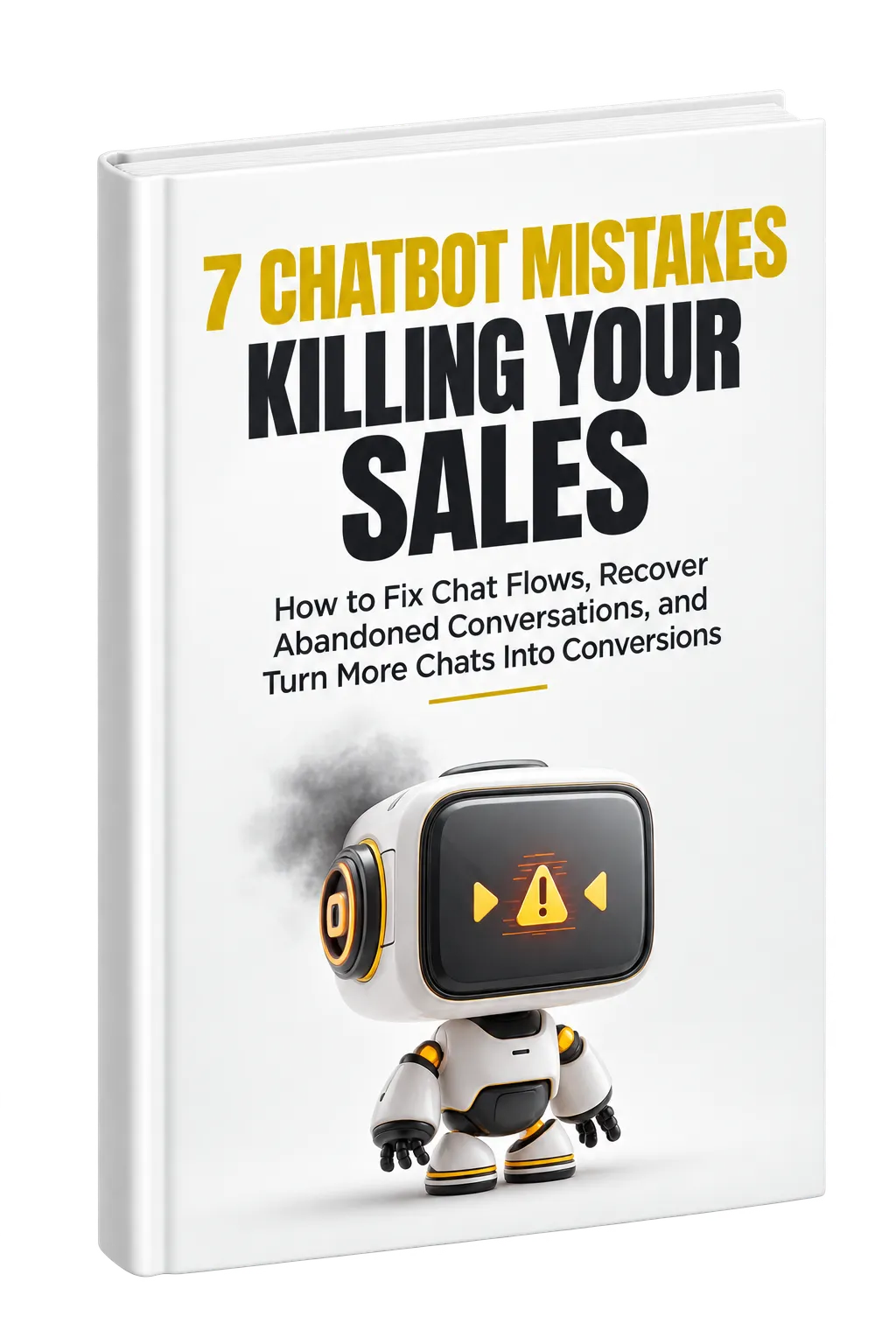
Why Chatbot Conversations Lose Sales
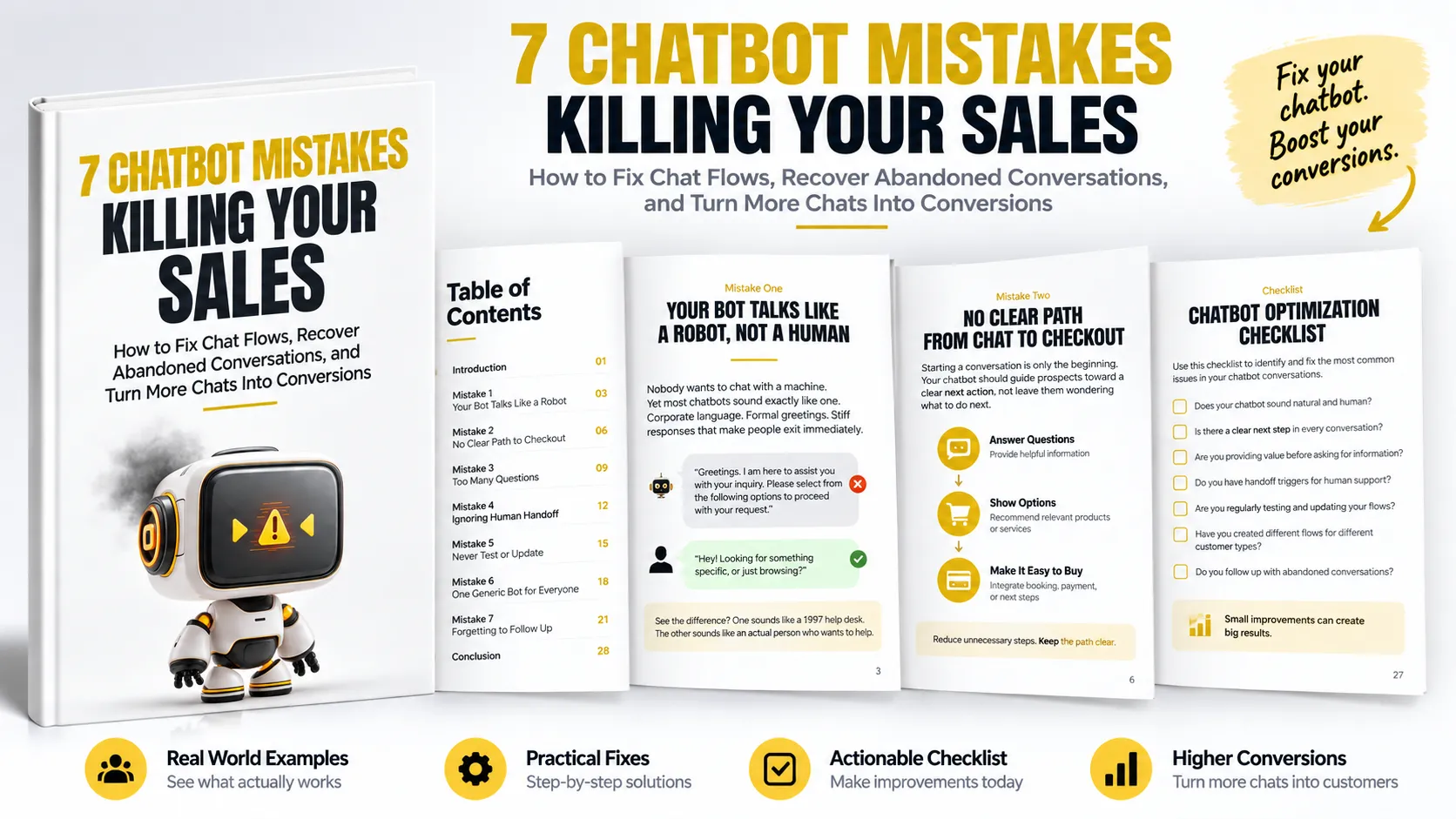
A chatbot can start conversations, answer questions, qualify prospects, and guide people through a buying process. But automation alone does not guarantee conversions. The quality of the conversation determines whether people continue engaging or leave.
The guide begins with a practical observation: businesses can have a chatbot connected to channels such as WhatsApp, Instagram, or Facebook Messenger and still lose prospects during the conversation. The problem is often not the underlying technology. It is how the conversation has been designed.
Effective chatbot conversations should feel natural, provide value, reduce friction, and give prospects a clear next step. The seven mistakes below identify the areas where chatbot flows commonly break down.
1. Your Bot Talks Like a Robot, Not a Human
Formal greetings, corporate language, and stiff responses can make a chatbot feel disconnected from the person using it. When people are accustomed to casual conversations in messaging apps, robotic language can create immediate friction.
Make the Conversation Sound Natural
The guide recommends writing chatbot messages the way a good salesperson would actually speak. Use natural questions, contractions, and approachable language. Read chatbot scripts aloud and remove wording that would feel unnatural in a real conversation.
For example, instead of using formal language such as asking how you may be of assistance, use a simpler question about what the person needs help with. Instead of formally requesting an email address before proceeding, explain why you need the email and what the person will receive.
The guide also describes an ecommerce example where rewriting chatbot scripts to match the language used by the retail team increased chatbot engagement by 40 percent.
2. There Is No Clear Path From Chat to Checkout
Starting a conversation is only one part of the process. Once a prospect is engaged, the chatbot should guide them toward a clear next action. A conversation that simply ends with a vague message such as asking the person to return if they need anything else can leave an interested prospect without direction.
Create One Obvious Next Step
The guide compares a chat flow to a hallway with doors. Each interaction should move the prospect forward, with one obvious path toward conversion rather than several competing options.
- If someone asks about pricing, show relevant packages and help them choose.
- If someone asks about features, demonstrate the value and offer an appropriate next step.
- If someone is browsing products, make it easy to view options and move toward adding an item to the cart.
- If someone wants to speak with the team, make booking or connecting as easy as possible within the conversation.
Reducing unnecessary steps is central to this approach. The resource recommends integrating chat flows with systems such as booking tools, payment processors, or CRMs when appropriate so prospects do not have to leave the conversation to complete an action.
One service-provider example in the guide increased consultation bookings by 65 percent after adding calendar integration to an Instagram chatbot.
3. You Ask Too Many Questions Before Providing Value
Asking for a prospect's name, email, phone number, industry, budget, and timeline before helping them can make the chatbot feel more like an interrogation than a conversation.
Provide Value First
The guide recommends reversing the usual sequence. Instead of designing the chatbot around everything the business wants to collect, first consider what the prospect needs.
Answer questions, explain products, show relevant options, and demonstrate how the business can help. Once value has been established, requests for information become more natural.
When multiple questions are necessary, avoid presenting them all at once. Ask one question, respond to the answer, provide useful context, and then continue with the next question.
The resource describes a lead-generation company that changed its sequence from asking five qualification questions first to answering common questions, demonstrating value, and then requesting contact information. Its completion rate increased from 23 percent to 61 percent.
4. You Ignore the Handoff to Live Support
Chatbots are useful for common questions, lead qualification, and straightforward processes. But some conversations require complexity, nuance, flexibility, or human empathy.
Know When a Human Should Step In
The guide recommends creating clear handoff triggers. These can include situations where:
- The question exceeds the chatbot's knowledge.
- A person expresses frustration or asks for a human.
- A high-value buying opportunity appears.
- A complex objection requires empathy or flexibility.
When a handoff is triggered, the transition should be immediate and clear. Depending on the setup, the conversation can be routed to a live agent, contact details can be collected for follow-up, or a specific time can be scheduled.
Give the Human Agent Context
A successful handoff should preserve the conversation history. The person taking over should understand what the prospect asked, what the chatbot explained, and where the conversation currently stands. Making customers repeat themselves can create unnecessary friction.
The guide describes a software company that connected prospects asking about custom integrations with a solutions team and provided the team with a conversation summary. The resource reports a 47 percent sales close rate on those calls.
5. You Never Test or Update Your Chat Flows
A chatbot should not be treated as something that is built once and then forgotten. Customer questions change, products evolve, pricing changes, new objections appear, and existing flows can become less useful over time.
Review the Data
The guide recommends regularly reviewing conversation data to identify where people drop off, which paths they take, and how many complete the desired action. It suggests reviewing data weekly when starting out and moving to monthly reviews once the chatbot becomes mature.
Read Real Conversations
Conversation data can reveal questions the chatbot cannot answer, confusing interactions, and missed opportunities. Reading recent chats can uncover problems that numerical metrics alone may not explain.
The resource recommends changing one element at a time and measuring the result. Businesses can test different opening messages, different ways of requesting email addresses, or different points at which an offer is presented.
One ecommerce example found that customers repeatedly asked sizing questions the chatbot did not understand. After updating the flow to address those questions proactively, completion rate improved by 22 percent. Another service provider increased chatbot conversion from 8 percent to 19 percent over six months through ongoing review, updates, and testing.
6. You Use One Generic Bot for Every Customer Type
Not every visitor arrives with the same context, needs, or level of product awareness. Someone arriving from an advertisement may already know what they want, while someone arriving through search may need more explanation. A returning customer may need an entirely different conversation.
Segment the Conversation
The guide recommends thinking about segmentation in the same way a strong salesperson would. The conversation can change according to factors such as traffic source, customer status, and buying intent.
For example, someone arriving from an advertisement for a specific product can be taken directly into information about that product instead of receiving a general introduction. A returning customer can be acknowledged and asked whether they need help with a previous order or are looking for something new.
Match the Flow to Customer Intent
Someone who selects a buying-oriented action is further along than someone who wants to learn more. The first person may need purchasing help or objection handling, while the second may need education and a demonstration of value.
The resource recommends starting with two or three major segments rather than making the system unnecessarily complicated. Variations can then be created from the core flow while keeping much of the underlying content consistent.
One digital course creator described in the guide tested segmented Instagram chatbot flows against a generic flow and saw a 34 percent increase in enrollments.
7. You Forget to Follow Up With Abandoned Conversations
A prospect who stops responding has not necessarily rejected the offer. They may have become distracted, busy, or interrupted, or they may simply need more time before making a decision.
Build Follow-Up Into the Conversation Flow
The guide recommends creating follow-up sequences for people who engaged with the chatbot but stopped before completing the desired action. A simple follow-up can remind the prospect about the conversation and invite them to continue.
The resource states that a follow-up message can recover 15 to 25 percent of abandoned conversations and recommends providing value in follow-up messages rather than repeatedly asking the prospect to buy.
Use a Structured Follow-Up Sequence
The guide provides an example sequence that progresses from a simple check-in to useful supporting material and then a final opportunity to act:
- Follow up the next day and ask whether the prospect has questions.
- Follow up later with a relevant case study or testimonial.
- Offer an incentive where appropriate.
- Move the prospect into a longer-term nurture sequence if they still do not respond.
The resource emphasizes timing. The first follow-up should come within 24 hours for an actively engaged prospect, with subsequent messages spaced over the following week or two. Follow-ups should also reflect where the person abandoned the conversation.
One consultant example in the guide recovered 23 percent of abandoned conversations through a three-message sequence and generated an additional $31,000 in the first quarter using it.
Turn Chatbot Automation Into a Better Sales Conversation
The seven mistakes share a common theme: effective chatbot automation is not simply about automating more interactions. It is about designing conversations that help people move forward.
- Make the chatbot sound natural.
- Give every conversation a clear path toward the next action.
- Provide value before requesting information.
- Create clear triggers for human handoff.
- Regularly measure, test, and update chat flows.
- Adapt conversations to important customer segments.
- Follow up with prospects who abandon conversations.
The guide's recommended approach is incremental. Start by identifying the mistake that is costing the most, fix it, measure the result, and then move to the next problem. Small improvements can compound over time.
For the complete examples, explanations, and practical guidance, download the full 7 Chatbot Mistakes Killing Your Sales resource.