AI Adoption Starts With People
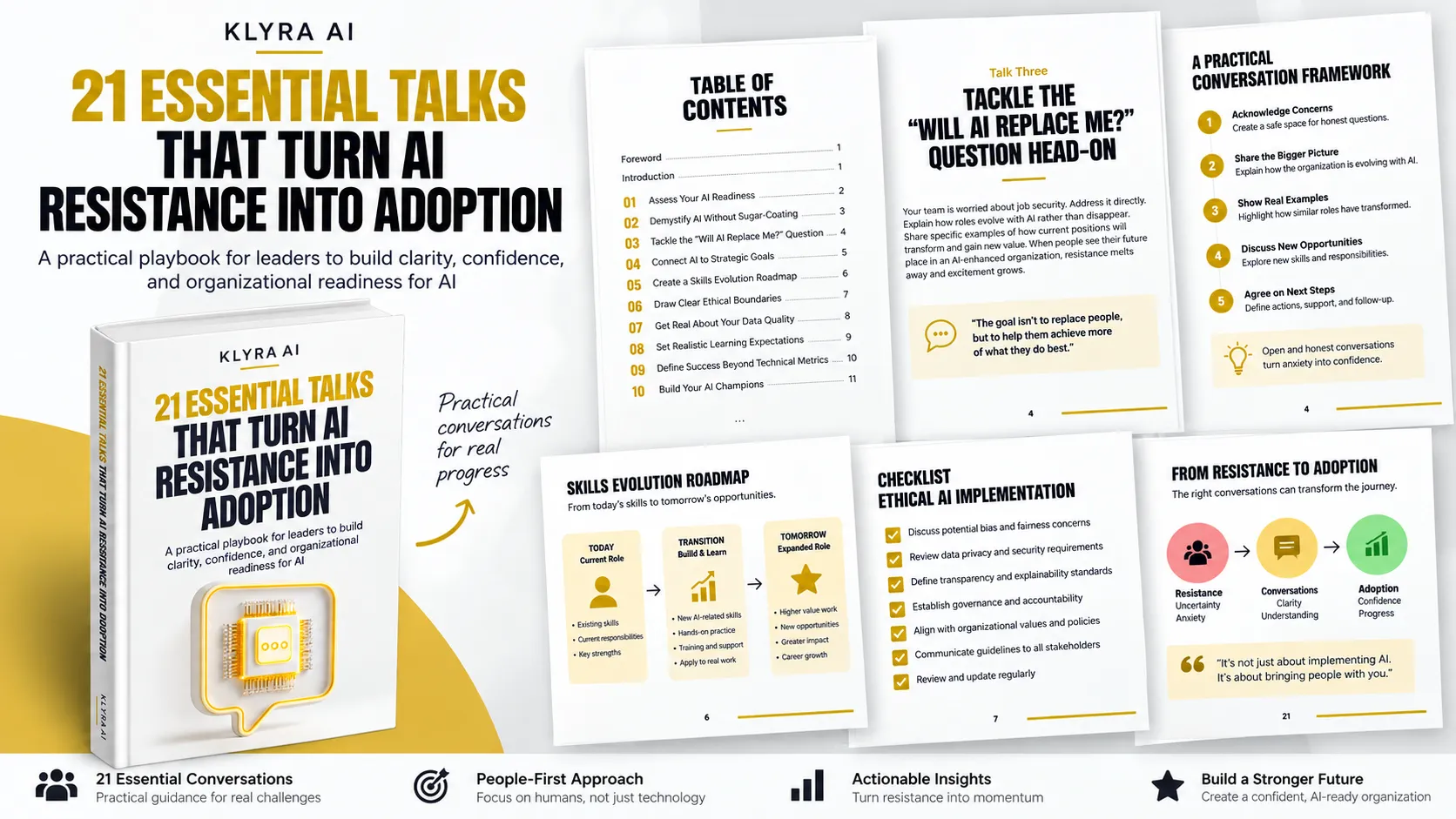
AI implementation is not only a technology challenge. The resource argues that successful implementation depends heavily on the people expected to work with AI. Technical capability alone is not enough if employees, leaders, and stakeholders are uncertain, unprepared, or resistant to change.
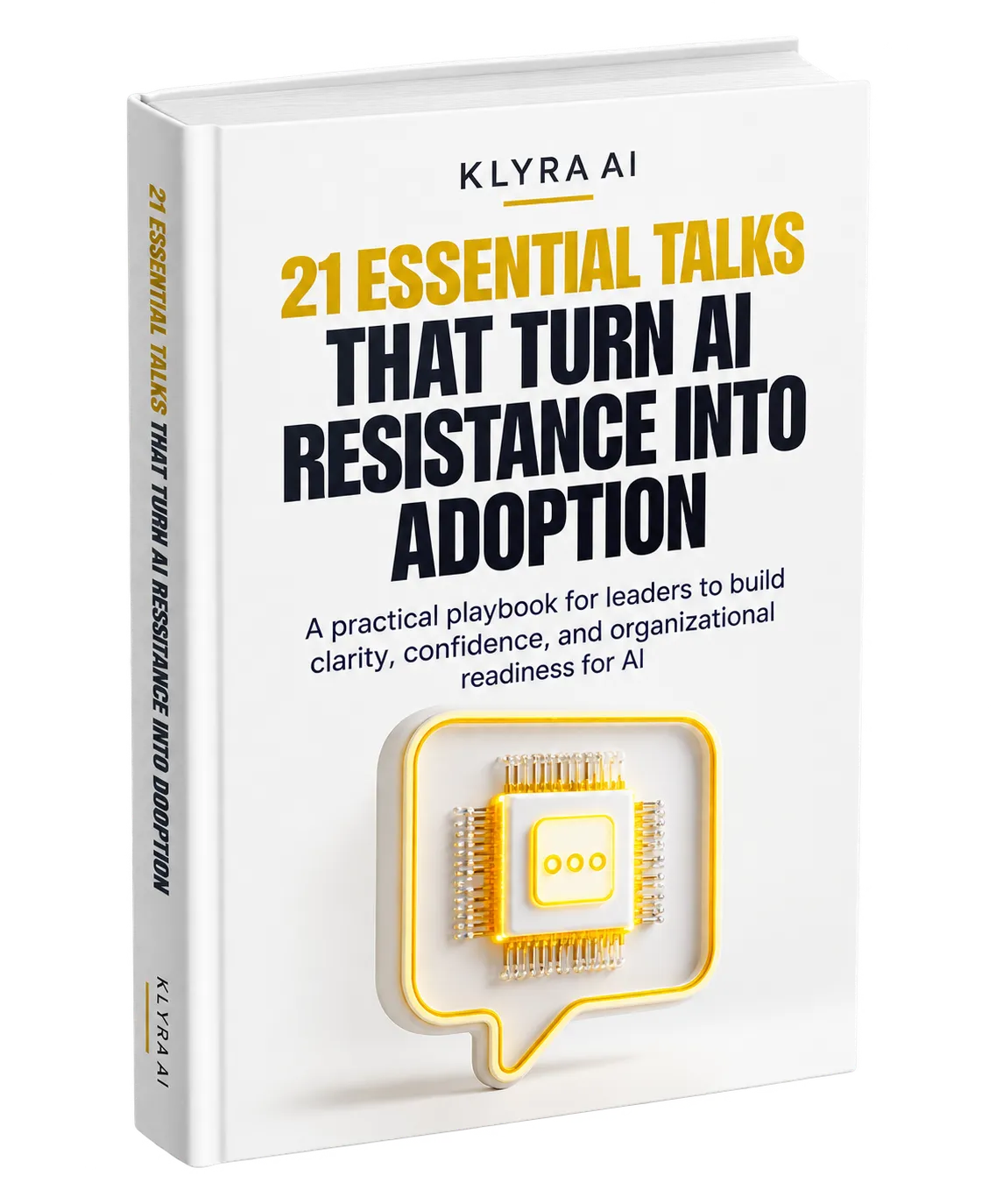
The 21 conversations in this playbook are designed to address the human and organizational issues that can determine whether an AI initiative gains momentum or struggles during implementation. The focus is on having the right conversations early, addressing concerns directly, and creating the conditions for people to participate effectively.
Start With an Honest Assessment
Assess AI Readiness With Brutal Honesty
Before implementing AI, organizations need an honest understanding of where they currently stand. The resource recommends gathering perspectives across departments to identify technical gaps, skill deficiencies, and cultural roadblocks. This assessment helps prevent organizations from pursuing AI solutions they are not prepared to support.
Get Real About Data Quality
Data readiness is another critical conversation. Organizations should examine the cleanliness, accessibility, and integration of their existing data and identify critical issues that need attention before implementation. The resource emphasizes that poor data can undermine AI outcomes regardless of the technology being used.
Make AI Understandable and Relevant
Demystify AI Without Sugar-Coating
People need explanations that avoid both unnecessary technical jargon and misleading simplifications. The playbook recommends explaining what AI can and cannot do in the organization's specific context, using concrete examples connected to everyday work. The objective is informed understanding rather than hype or fear.
Connect AI Directly to Strategic Goals
AI initiatives should be connected to problems the organization already needs to solve and priorities it already values. When people understand how AI contributes to existing organizational goals, adoption can move beyond reluctant compliance toward active commitment.
Address Employee Concerns Directly
Tackle the “Will AI Replace Me?” Question Head-On
Job security concerns should not be avoided. The resource recommends addressing them directly and explaining how roles can evolve with AI. Showing how current positions may transform and gain new value can help employees understand their potential place in an AI-enhanced organization.
Create a Skills Evolution Roadmap
Employees need to see how their existing capabilities can develop alongside AI. A skills evolution roadmap should show how current skills can transform into future capabilities, supported by learning milestones and available resources. A visible development path can reduce transition anxiety and build confidence.
Set Realistic Learning Expectations
AI adoption involves a learning curve. The resource recommends acknowledging that productivity may temporarily dip during implementation while setting realistic expectations about adaptation and proficiency. Recognizing this early can help maintain commitment during the initial adoption period.
Establish Responsible AI Practices
Draw Clear Ethical Boundaries Now
Ethical considerations should be discussed before implementation rather than after problems emerge. The playbook highlights algorithmic bias, privacy concerns, and decision transparency as areas that require early discussion. Organizations should establish governance structures aligned with their values before technical work begins.
Define Human-AI Collaboration Rules
Teams also need clarity about the relationship between AI recommendations and human judgment. The resource recommends establishing when AI recommendations should be trusted, when they should be questioned, and what appropriate levels of reliance look like for different AI applications.
Define How Success Will Be Measured
Define Success Beyond Technical Metrics
Successful AI implementation should not be measured solely by whether technology has been deployed. The resource recommends working with stakeholders to define meaningful measures that can include adoption rates, efficiency gains, improvements in decision quality, and broader business outcomes.
Clear measures help keep the organization focused on the results that matter rather than treating technical deployment as the final objective.
Build Leadership and Employee Participation
Build Your AI Champions
Organizations can identify people in different departments who already demonstrate enthusiasm for AI and equip them with knowledge, resources, and a clear mission to support their peers. These internal champions can provide trusted guidance and help spread learning across the organization.
Get Leaders Using AI First
Leadership behavior has an important role in adoption. The resource recommends coaching executives and leaders to demonstrate personal engagement with AI. When leaders actively use and discuss AI, they create permission for others to embrace the change.
Build Risk-Free Practice Environments
Fear of failure can prevent employees from experimenting with AI. Creating safe environments where people can practice, make mistakes, and build confidence without consequences encourages active learning. Organizations should clearly define what these safe environments are and how they operate.
Create Ongoing Communication and Feedback
Create a Continuous Feedback System
AI implementation should not be a one-way process. The playbook recommends creating mechanisms to gather, analyze, and act on user feedback throughout the journey. Multiple feedback channels and clear processes for addressing concerns can turn implementation into an ongoing dialogue.
Plan Your Communication Rhythm
Too little information can create rumors, while too much can cause people to disengage. A strategic communication rhythm should define how often updates are shared, which channels are used, and who is responsible for communication. The goal is to keep stakeholders informed without creating change fatigue.
Show “A Day in the Life” With AI
Abstract descriptions of AI benefits may not be enough to convince skeptics. The resource recommends creating detailed scenarios showing how specific roles could operate with AI integrated into their daily workflows. This gives stakeholders an opportunity to mentally rehearse new work patterns and makes an unfamiliar future more tangible.
Remove Organizational Friction
Clarify Who Makes Which Decisions
Unclear decision ownership can slow an AI initiative. The resource recommends explicitly defining authority across areas such as technical architecture and deployment timing. A decision rights framework can help prevent important choices from becoming prolonged debates.
Map Cross-Department Impact Chains
AI changes can affect more than the department where implementation begins. Organizations should map how changes in one area may affect interconnected departments and establish coordination mechanisms for managing those impacts.
Capture and Share AI Knowledge
Teams should not repeatedly solve the same problems independently. The playbook recommends systems for documenting, validating, and sharing AI insights across the organization. Lessons from early adopters can then help accelerate progress for other teams.
Prepare for Different Forms of Resistance
Prepare for Specific Resistance Types
Resistance does not always come from the same underlying concern. The resource distinguishes between fear-based, knowledge-based, and interest-based resistance and recommends preparing responses that address the specific reasons behind opposition.
Understanding the type of resistance can turn opposition into useful feedback and provide a more thoughtful path toward implementation.
Redefine How Teams Work
Establish New Team Operating Norms
Existing work habits can undermine the benefits of AI. Teams should co-create updated agreements that recognize how AI may change collaboration, decision-making, and communication. This can include reconsidering meeting structures, information-sharing protocols, and performance expectations.
New operating norms provide greater clarity about how teams function in an AI-enhanced environment.
The 21 Conversations as an Adoption Playbook
Together, these conversations provide a practical approach to the organizational side of AI implementation. They move from understanding readiness and addressing concerns to establishing responsible practices, developing skills, improving communication, coordinating departments, and redefining team behaviors.
The resource's central message is that organizations should start these conversations early and revisit them throughout implementation. AI adoption becomes more manageable when people understand what is changing, why it matters, how their work may evolve, and where they can participate in the process.
The complete playbook contains all 21 conversations and is designed to help organizations identify the discussions that are most urgently needed. The recommended next step is to identify the three conversations most urgently needed in your organization and schedule them.