Blogs / How Website AI Chatbots Are Replacing Static Pages With Live Business Intelligence
How Website AI Chatbots Are Replacing Static Pages With Live Business Intelligence
Klyra AI / January 11, 2026
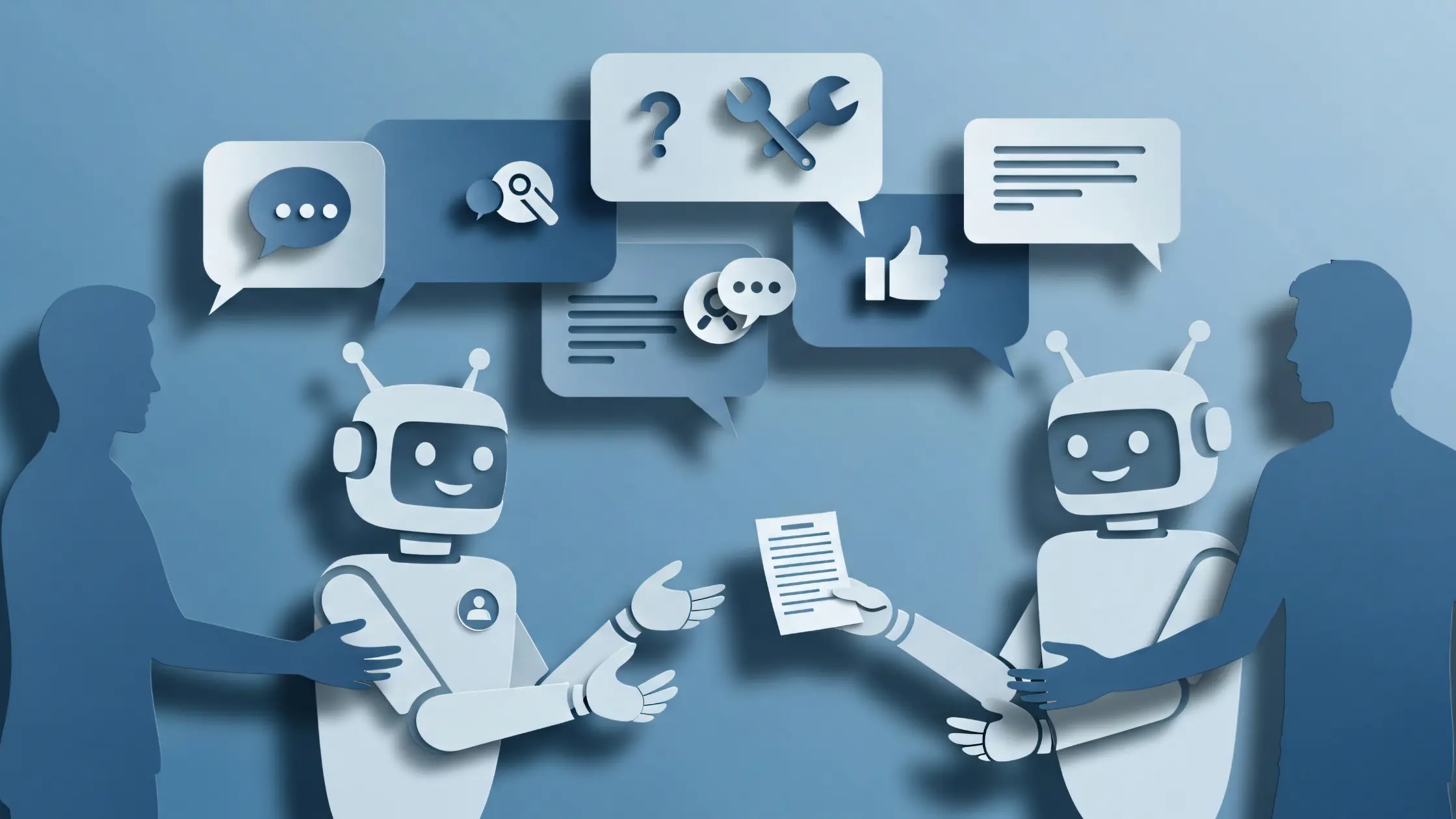
For most of the internet’s history, websites have been static by design. They present information, list features, and hope visitors find what they need. Even as design improved and content expanded, the underlying model remained unchanged. Users browse. Businesses wait. If a question is not answered clearly, the opportunity is often lost.
By 2026, that model is breaking down. Website AI chatbots are reshaping how businesses communicate online by turning passive pages into interactive systems that respond, explain, and adapt in real time. This shift is not cosmetic. It represents a fundamental change in how information is delivered and how user intent is captured.
Why Static Websites No Longer Match User Behavior
Modern users do not browse websites the way they once did. They arrive with specific questions, limited patience, and high expectations shaped by search engines and conversational interfaces. Scrolling through menus or reading long pages feels inefficient when a direct answer is desired.
Static websites force users to adapt to the site’s structure. If information is buried, unclear, or phrased differently than expected, friction increases. Many visitors leave not because the information is missing, but because it is hard to extract quickly.
This gap between how websites present information and how users seek it is where AI chatbots create leverage.
What Website AI Chatbots Actually Change
AI chatbots replace navigation with conversation. Instead of asking users to find the right page, they invite users to ask questions directly. The interface adapts to intent rather than forcing intent to adapt to structure.
When implemented correctly, a website chatbot does not just answer FAQs. It explains products, clarifies policies, guides users through decisions, and escalates complex issues when needed. The experience feels less like browsing a brochure and more like talking to a knowledgeable representative.
This shift matters because conversation is how humans naturally resolve uncertainty. AI chatbots align websites with that instinct.
From Customer Support to Knowledge Access
Early website chatbots were primarily support tools. They handled simple questions to reduce ticket volume. While useful, this framing underestimated their potential.
Modern AI chatbots function as access layers to business knowledge. They can be trained on documentation, help centers, policies, product catalogs, and internal resources. This allows them to answer a wide range of questions with consistency and context.
Instead of duplicating content across pages, businesses can centralize knowledge and expose it conversationally. This reduces maintenance overhead while improving clarity for users.
Why Grounding and Accuracy Matter
The effectiveness of a website AI chatbot depends on what it knows and how it is constrained. Chatbots that generate answers without grounding risk misinformation and loss of trust.
Professional implementations restrict responses to approved sources and ensure answers are derived from actual business data. This makes the chatbot reliable rather than speculative.
Klyra AI External Chatbots are built with this principle in mind. They allow businesses to train chatbots using their own URLs, documents, spreadsheets, and structured content, with the option to limit responses strictly to those sources. This ensures accuracy while maintaining flexibility.How Chatbots Improve Conversion Without Selling
One of the most misunderstood aspects of website AI chatbots is their role in conversion. Effective chatbots do not push users toward purchases. They reduce uncertainty.
When users understand a product, a policy, or a process clearly, they are more likely to move forward confidently. Chatbots support this by answering nuanced questions that static copy often fails to anticipate.
This makes conversion a byproduct of clarity rather than persuasion. The chatbot acts as an explainer, not a salesperson.
Operational Benefits Beyond the Front End
Website AI chatbots also generate operational insight. Every question asked reveals intent, confusion, or unmet needs. Over time, this data becomes a feedback loop for improving products, documentation, and messaging.
Businesses can identify recurring questions, gaps in content, or friction points that were previously invisible. This allows websites to evolve based on real user behavior rather than assumptions.
In this sense, chatbots turn websites into listening systems as much as communication tools.
Responsible Deployment and User Trust
As chatbots become more capable, responsible deployment becomes critical. Users should know when they are interacting with an AI system. Expectations should be clear. Escalation paths should exist for complex or sensitive issues.
Trust is built through consistency, transparency, and accuracy. Chatbots that overpromise or obscure their limitations quickly undermine confidence.
Organizations that treat chatbots as part of their knowledge infrastructure, rather than as marketing gimmicks, see far better long term results.
Industry Context and Maturity
Conversational AI has matured significantly over the past decade. Advances in language models and retrieval systems have made it practical for real world business use rather than experimentation.
An overview of chatbot technology and its evolution is available through Wikipedia’s reference on chatbots, which outlines how conversational systems are used across customer service, information delivery, and automation contexts.
Why Website Chatbots Are Becoming the Default Interface
Just as search replaced directories and feeds replaced static homepages, conversation is emerging as the default interface for complex information.
Websites that rely solely on static pages will increasingly feel outdated. Users expect interaction, responsiveness, and clarity on demand.
Website AI chatbots meet this expectation by making information accessible in the most natural way possible.
The Long Term Shift
Over time, the distinction between websites and assistants will blur. Sites will no longer just display information. They will explain it, contextualize it, and adapt it to each visitor.
This does not eliminate the need for good content or design. It amplifies their impact by making them usable in real time.
In a digital landscape defined by speed and intent, website AI chatbots represent a quiet but profound evolution. They turn static presence into active understanding.