Blogs / How AI Voice Cloning Is Reshaping Audio Production Without Replacing Human Voice
How AI Voice Cloning Is Reshaping Audio Production Without Replacing Human Voice
Klyra AI / January 12, 2026
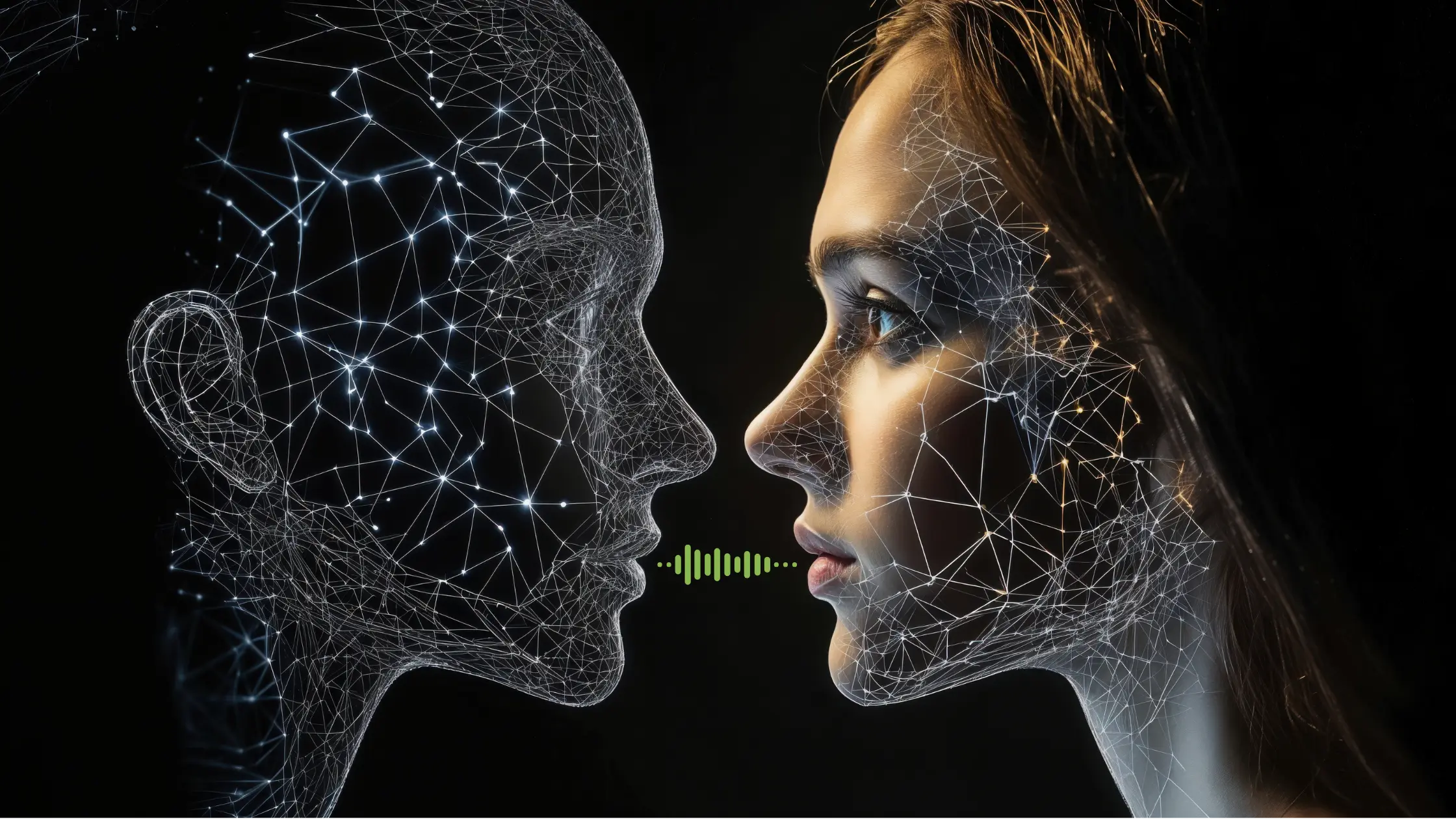
Voice is one of the most human elements of communication. It carries tone, emotion, pacing, and identity in ways text alone cannot. For decades, producing voice content at scale required repeated recording sessions, rigid scripts, and significant coordination. As demand for audio grew across podcasts, video, training, and applications, this model became increasingly fragile.
By 2026, AI voice cloning is changing how organizations think about voice production. Not by eliminating human voices, but by extending them. Voice cloning allows a single, consented voice to be reused reliably across languages, formats, and updates without sacrificing consistency or quality.
Why Traditional Voice Production Does Not Scale
Recording voice content has always been linear. Each update requires a new session. Each correction adds cost and delay. For teams producing frequent updates, this friction accumulates quickly.
The problem becomes more pronounced as content expands. Training libraries grow. Product demos change. Marketing campaigns need localization. Even small script adjustments can trigger full re recording cycles.
This reality forces tradeoffs. Either content becomes outdated or quality suffers. AI voice cloning addresses this structural limitation.
What AI Voice Cloning Actually Does
AI voice cloning creates a digital voice model that captures the tone, cadence, and expressive range of a real speaker. Once trained with consented samples, the model can generate new speech that sounds consistent with the original voice.
This is not simple text to speech. Cloned voices preserve identity. They maintain recognizable pacing and emotional character, which is critical for brand trust and audience familiarity.
The result is continuity. A voice can remain consistent across hundreds of assets without repeated recording.
Consistency as a Strategic Advantage
In audio heavy workflows, inconsistency erodes trust. When narration changes subtly from one update to the next, audiences notice. Training content feels fragmented. Brand presence weakens.
Voice cloning solves this by making consistency the default. Updates sound like extensions of the same voice rather than replacements.
This matters most in long lived content such as education, onboarding, and product documentation where clarity and familiarity compound over time.
Scalability Without Creative Loss
A common concern is that cloned voices will sound flat or robotic. Early systems often did. Modern voice cloning focuses on expressive control.
Pitch, pacing, pauses, and emotional tone can be adjusted intentionally. This allows creators to tailor delivery to context while preserving identity.
Human creativity remains central. AI handles execution. Humans decide intent.
Real World Applications Beyond Narration
AI voice cloning is used across a wide range of scenarios. Product teams use it for consistent in app guidance. Educators use it to update courses without re recording entire modules. Media teams use it to localize content while keeping the same recognizable voice.
In each case, the value lies in flexibility. Voice becomes editable rather than fixed.
This transforms audio from a bottleneck into a living asset.
How Klyra AI Approaches Voice Cloning
Klyra AI Voice Cloning is designed as a professional grade system built around consent and control. Users can train lifelike digital voice models that capture natural tone and emotion while supporting generation across more than 70 languages.The tool provides fine grained control over delivery and supports secure workflows designed for consistent narration, character voices, and scalable audio production.
Ethics, Consent, and Trust
Voice is deeply personal. Responsible voice cloning requires explicit consent, secure handling of voice data, and clear usage boundaries.
Organizations that deploy voice cloning successfully treat it as an extension of the original speaker, not a replacement. Transparency with audiences reinforces trust rather than undermining it.
Ethical safeguards are not optional. They are foundational to sustainable adoption.
Human Oversight Remains Essential
AI voice cloning does not remove the need for review. Generated audio should be audited for accuracy, tone, and appropriateness.
The most effective workflows combine AI speed with human judgment. Humans decide what should be said and how it should feel. AI ensures it can be delivered consistently.
This balance is what keeps voice cloning aligned with real communication goals.
Industry Context and Technical Maturity
Voice synthesis and cloning have advanced rapidly through improvements in neural audio models. What was once experimental is now stable enough for professional use.
An overview of voice cloning and related technologies is available through Wikipedia’s reference on voice cloning, which outlines how digital voices are modeled and generated.
Why Voice Cloning Is Becoming Audio Infrastructure
Infrastructure tools are defined by reliability and necessity. As audio content volumes grow, the ability to update and scale voice reliably becomes essential.
Voice cloning provides that reliability. It ensures continuity across time, teams, and formats.
Organizations that adopt it early gain flexibility without compromising identity.
The Long Term Outlook
Over time, voice cloning will become an expected part of audio workflows. It will operate quietly behind the scenes, supporting updates, localization, and experimentation.
The human voice will remain central. AI will simply make it easier to extend.
In a world where clarity and consistency matter, AI voice cloning is reshaping audio production without erasing the human element that makes voice powerful.